.png?resize=600x0)
The Supply Chain Behind a Simple Pour

What do a wine glass, a bottle opener, a martini shaker, a cork, and a twist top all have in common?
They are all part of a supply chain story we rarely stop to notice.
When we sit down in a restaurant, attend an event, or raise a glass with colleagues, we experience the finished moment. We notice the atmosphere, the service, the conversation, the presentation, and the connection.
What we do not always see is the network of raw materials, processing, energy, labour, packaging, logistics, cost, and environmental decisions that made that moment possible.
A glass is not just a glass. A cork is not just a cork. A bottle opener is not just a tool.
Each one represents a chain of inputs, decisions, trade-offs, and people.
That is why I wanted to take a closer look at the everyday barware and accessories we often take for granted. These are simple objects on the surface, but behind each one is a detailed supply chain that connects raw materials, manufacturing, design, transportation, sustainability, food safety, and end-user value.
The more we understand these details, the better prepared we are to ask meaningful questions, make informed purchasing decisions and collaborate across the full chain.
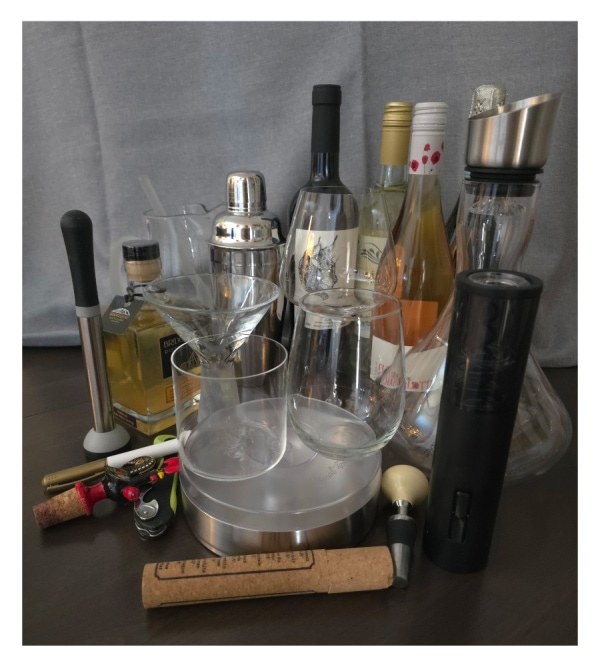
1. Glassware: Wine Glasses and Martini Tumblers
Glassware may look simple and elegant when it reaches the table, but its production is a chemical and thermal process that requires precision, control, and significant energy.
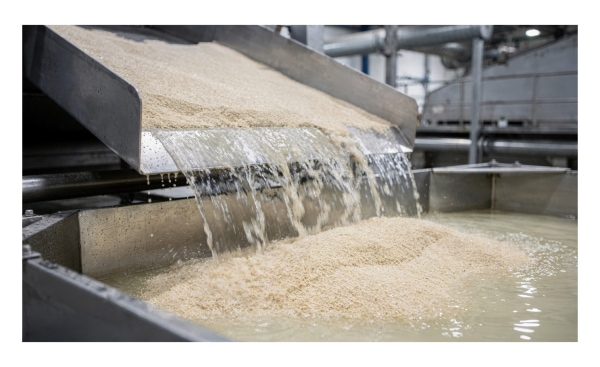
High-quality glassware begins with carefully selected raw materials.
Material snapshot: Silica sand is the foundation ingredient and requires high purity and low iron levels to support clear glass. Soda ash helps lower the melting point of the silica mixture. Limestone helps stabilize the finished glass. Clarifiers, including trace materials such as antimony or erbium in some applications, may be used to eliminate gas bubbles and neutralize colour tints.
From there, the supply chain expands quickly.
The upstream process can include specialized sand mining, soda ash production through the Solvay process, limestone sourcing and energy procurement, often natural gas.
The midstream process includes furnace melting at approximately 1500°C, followed by manual or automated glassblowing, annealing for stress relief, and laser rim cutting for a refined finish.
The downstream process introduces another reality: glassware is fragile. It requires protective packaging, often including EPE foam and corrugated materials, along with careful handling and high-risk fragile logistics.
By the time a wine glass reaches a restaurant table, it has already passed through a complex network of mining, chemistry, energy, forming, finishing, packaging, and transportation.
Why it matters: When we look at a glass, we may notice its clarity, shape, or feel. The supply chain also asks us to consider the energy required to produce it, the materials used to protect it, the logistics risk involved in moving it, and the cost of getting it safely to the end user.

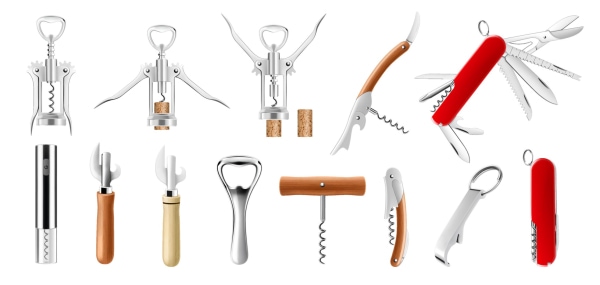
2. Wine Bottle Opener: The Waiter’s Friend
A waiter’s friend is one of the most familiar tools in hospitality.
It is compact, practical and often overlooked. Yet it is a mechanical assembly that depends on material strength, precision movement and multiple components working together.
Material snapshot: The frame may be made of 420-grade stainless steel. The worm, or screw, may be made of high-carbon steel to provide the strength needed to enter the cork cleanly. The worm may also include a PTFE coating, often known as Teflon, to support smoother movement into the cork. Handles may be made from wood scales, such as Pakkawood or olive wood, or from high-density ABS plastics.
The upstream process can include iron ore mining, chromium and nickel alloying for stainless steel and timber harvesting for wood-handled products.
The midstream process may include component stamping, heat treatment such as quenching and tempering, CNC machining of the screw and multi-point assembly.
The downstream process includes retail packaging and global distribution to hospitality suppliers, restaurants, bars and consumers.
This one small tool brings together mining, metallurgy, coatings, plastics, forestry, machining, assembly and distribution.
Why it matters: In a restaurant environment, a bottle opener is not just an accessory. It is part of the service experience. It must perform consistently, move smoothly, support the user and hold up under repeated use.
3. Martini Shaker: Cobbler and Boston Style
A martini shaker is another item that looks straightforward from the outside.
In reality, it sits at the intersection of food safety, corrosion resistance, thermal conductivity, manufacturing precision and hospitality performance.
Material snapshot: Many quality shakers are made of 304 stainless steel, often with an 18/8 or 18/10 chromium-to-nickel ratio to enhance rust resistance and durability. Decorative finishes, such as copper or gold tones, may use PVD, which stands for Physical Vapour Deposition. Some three-piece shakers also use food-grade silicone gaskets to help prevent leaks.
The upstream supply chain includes metal-refining and sheet-metal rolling mills.
The midstream process may include deep drawing through hydraulic pressing, mirror polishing and electroplating or PVD coating.
The downstream process includes mass-market logistics for retail and bulk distribution for bars, restaurants, and hospitality suppliers.
A shaker needs to withstand moisture, acidity, temperature change, cleaning, handling, and frequent movement in a busy bar environment.
Why it matters: The material choice is not only about appearance. Stainless steel, surface finishes and food-grade components all influence performance, safety, cleaning, wear, and end-user experience.
4. Closures: Twist Tops versus Corks
Wine closures are one of the clearest examples of how two products that serve a similar purpose can come from very different supply chains.
One is highly industrial. One is agricultural.
Both matter.
Twist Tops
A twist top, often referred to as a Stelvin cap, is an engineered closure system designed for consistency, efficiency, and performance.
Material snapshot: Twist tops are made of aluminum alloy. They may also include LDPE liners and Saran Tin oxygen barriers to help manage oxygen transfer and protect the wine.
The supply chain can include bauxite mining, aluminum smelting, sheet rolling, high-speed printing and liner insertion.
This is an industrial supply chain involving mining, refining, forming, printing, barrier materials and closure application.
Natural Cork Stoppers
A natural cork stopper begins in a very different place.
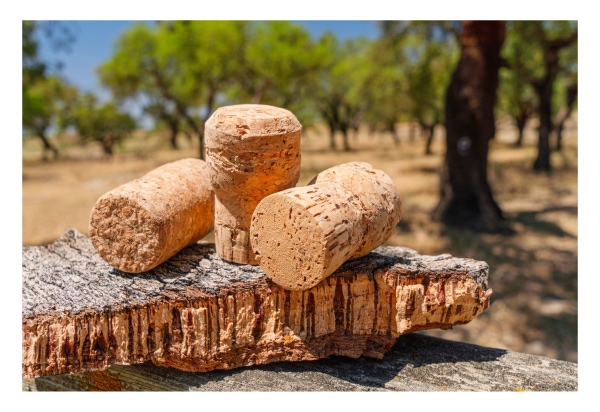
Material snapshot: Natural cork comes from the bark of the Quercus suber, or cork oak tree. This supply chain depends on forestry management, bark harvesting, seasoning, boiling and sanitization, precision punching and quality sorting.
The cork supply chain is shaped by agricultural timing, skilled harvesting, natural material variation, sanitation and grading.
A cork and a twist top may both close a bottle, but their supply chains are fundamentally different.
Why it matters: One closure asks us to think about mining, smelting, liners, printing, recycling and industrial-scale manufacturing. The other asks us to consider forestry, agricultural cycles, biodiversity, skilled labour, sanitation, and the quality of natural materials.
Neither story is as simple as "better" or "worse". The stronger question is: what is the right closure for the right product, purpose, performance requirement and value chain?
These Items May Be Small, But the Supply Chain Behind Them Is Not
Together, these everyday items connect raw materials, mining, forestry, energy procurement, chemical processing, thermal processing, metal refining, machining, coatings, food safety requirements, packaging, fragile logistics, hospitality distribution, reuse, recycling, waste, replacement cost, and end-user experience.
That is a significant amount of activity behind objects that many of us use without thinking twice.
This is why supply chain awareness matters.
When we understand the inputs behind everyday products, we are better equipped to manage costs, reduce waste, ask better questions, and foster stronger collaboration.
For restaurants, bars and hospitality businesses, these decisions affect operations every day.
For suppliers and manufacturers, they affect sourcing, production, quality and customer trust.
Consumers shape the experience we enjoy, often without realizing the number of people, materials, and processes involved.
For supply chain professionals, they remind us that value is not created at one point in the chain. It is created across the chain.
The Purchasing Decision Is Bigger Than Price
When we make purchasing decisions, there is more to consider than the unit price.
Is the product durable enough for repeated use, or will it need to be replaced more often, resulting in a higher total cost?
Do the materials meet health, safety, and food-grade requirements?
Does the item perform well for the person using it?
Could failure create service issues, waste, customer dissatisfaction or additional downstream cost?
Are there any plastics, liners, coatings, or packaging materials we should understand better?
Can the product be reused, recycled, repaired, or responsibly replaced?
These questions are not meant to complicate decision-making. They are meant to improve it.
When we understand the full story behind a product, we are better positioned to make decisions that support value, performance, safety, sustainability, and collaboration.
The Bigger Supply Chain Conversation
The supply chain is not separate from hospitality, business, or the consumer experience.
It is embedded in all of it.
Every glass, cork, cap, shaker, opener and package carries a story of materials, movement, energy, labour and choice.
The more we learn about that story, the more capable we become as leaders, buyers, suppliers, operators, and consumers.
We can ask better questions. We can identify better options. We can reduce avoidable waste. We can understand the cost more clearly. We can collaborate earlier and more effectively.
That is where better value is created.